book review · The Extended Phenotype
The Extended Phenotype
2025-12-03 · 3 min read
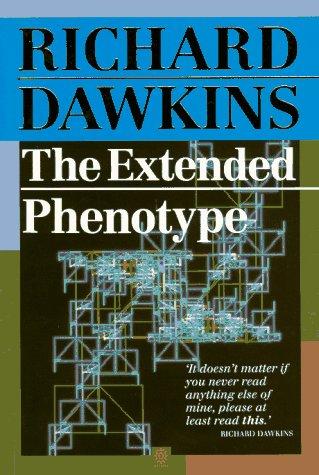
I keep a copy of this on the workbench, not the reading chair, because I ended up needing the glossary constantly and a book you’re flipping back to every few pages belongs somewhere sturdier. Dawkins’s actual thesis here is one of the better ideas I’ve read in evolutionary biology: a gene’s expression doesn’t stop at the organism’s own body, its effects on the wider world, a beaver’s dam, a caddis fly’s case, a parasite reshaping its host’s behavior, are just as much the gene’s handiwork as the organism’s own physical form. Animal artifacts, in his framing, are engineered by natural selection the same way a wing or a claw is, not incidental byproducts of behavior but direct extensions of the phenotype itself.
That idea, when the book is actually discussing it, is genuinely thrilling, the strongest and most original science I’ve found in anything of his I’ve read, better in my opinion than the more famous Selfish Gene it follows. The trouble, and several other readers have landed on this before me, is how little of the book is actually spent on that idea. A real majority of the page count goes to Dawkins defending the selfish-gene framework itself against academic critics from the late seventies, technical rebuttals that assume you’ve already read and absorbed his earlier book and, ideally, followed the specific controversy he’s litigating. The chapter on “outlaw genes” in particular drags in a way the core thesis chapters never do.
This is not a book for a lay reader despite what the jacket blurb promises about anyone willing to make the effort. I made the effort and still leaned on the glossary constantly, and I’d call myself reasonably scientifically literate for someone whose actual training is in preserving animals rather than studying their genetics. If you haven’t read The Selfish Gene first, don’t start here. If you have, and you’re specifically curious about the extended-phenotype idea itself, skip straight to the back third of the book, where the actual argument lives, and treat the rest as optional academic bookkeeping.
Worth the effort for the core idea alone. Just go in knowing you’re reading a rebuttal essay with a brilliant thesis buried inside it, not the thesis on its own.