game review · Kemet
Kemet
2026-07-31 · 3 min read
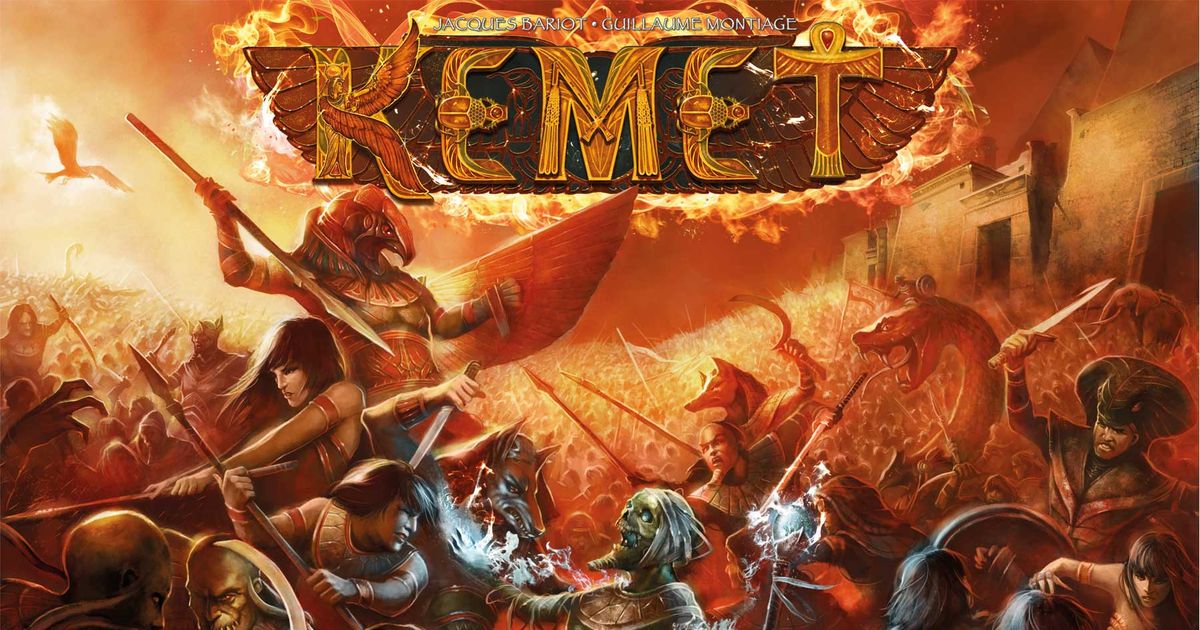
I’ve got a soft spot for games that punish you for turtling, probably because my day job is all patience and slow careful work, degreasing a skull, setting an eye just right, and I want my games to move at the opposite speed. Kemet delivers that. Most 4X-adjacent war games spend an hour on buildup before anyone actually fights, and Kemet flips that, rewarding aggression from turn one, dice-less combat that’s tense without being random, monsters that feel genuinely powerful when you land one in a fight instead of decorative.
The power tile tree is where the real design lives and also where the game’s biggest problem lives. Forty-eight tiles, unique abilities, iconography that isn’t always self-explanatory, and you’re expected to draft a plan around them while the board is actively moving under you. That’s a real decision density, real analysis-paralysis risk for the wrong kind of player, and I’ve sat at tables where a slow deliberate player turned a ninety minute game into something closer to three hours. When it moves at pace, it’s one of the best war games I own. When it doesn’t, the whole thing sags.
The complaint I take most seriously, because I’ve watched it happen and it soured a whole session, is kingmaking. Two players team up on a third for a single round, no lasting alliance, just enough to tip a fight, and there’s no real mechanism stopping it. One review nailed this exactly: the issue isn’t that it happens occasionally, it’s that the design offers no answer to it, and that’s the kind of flaw that only shows up after a dozen plays with a group that actually plays to win.
Box weight and component quality here are genuinely excellent, real heft, good sculpts on the monsters specifically, the kind of production that makes we want to keep it on a visible shelf rather than the back row. I’d steer new players toward a fast, experienced group before writing this off. Slow tables kill it. Fast ones make it sing.